Intro
If someone asked you to name the greatest miracles in the Bible, you would probably think of Moses parting the Red Sea, Elijah calling fire down from heaven, or Jesus raising Lazarus from the dead. Those are the stories we hear preached most often because they reveal God’s incredible power in dramatic and unforgettable ways.
Then there is the story of the floating axe head.
At first glance, it almost seems out of place. An axe head falls into a river, a prophet throws a stick into the water, and somehow the iron floats long enough for it to be recovered. The entire account takes only seven verses to tell, and many Christians either overlook it altogether or wonder why God included such an ordinary event in the pages of Scripture.
Yet one of the beautiful things about the Bible is that no passage is included by accident. Paul reminds us that “all Scripture is inspired by God and is profitable” (2 Timothy 3:16). That means even the shortest stories have something to teach us. Sometimes the lessons found in these lesser-known accounts become some of the most personal and encouraging truths in all of God’s Word.
The story of Elisha and the floating axe head is one of those hidden treasures. While it may not receive the attention of many other Old Testament miracles, it gives us a wonderful glimpse into God’s character and reminds us that He cares about the everyday concerns of His people just as much as the great events that shape history.
The Story of Elisha and the Floating Axe Head
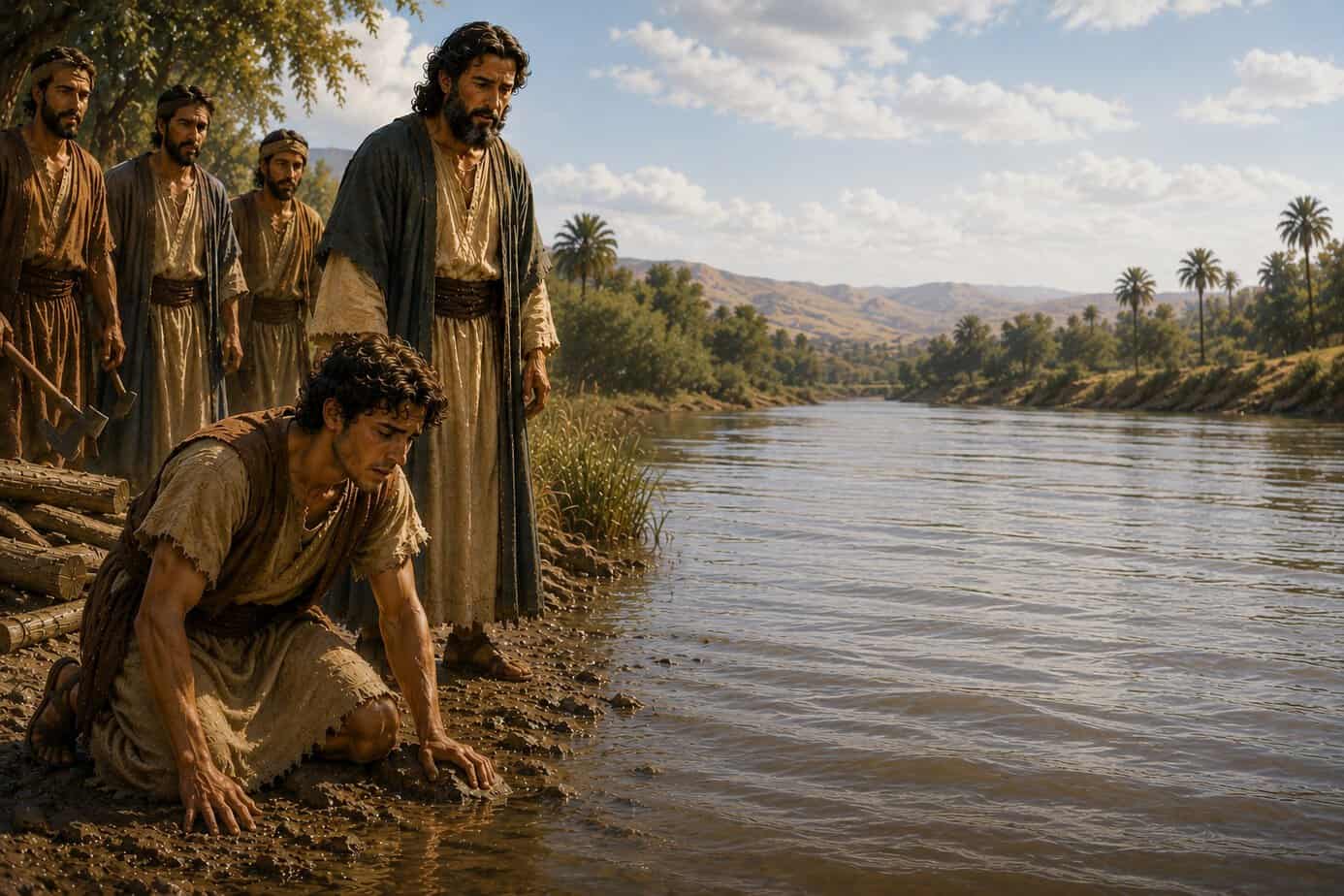
The account is found in 2 Kings 6:1-7, during the ministry of the prophet Elisha. By this time, Elisha had become the spiritual leader of a growing group of men known as the “sons of the prophets.” These were not his biological children but students preparing for lives of serving the Lord. As more men joined them, they quickly discovered that the place where they lived and studied had become too small.
The Bible says,
“Now the sons of the prophets said to Elisha, ‘See, the place where we dwell under your charge is too small for us. Let us go to the Jordan and each of us get there a log, and let us make a place for us to dwell there.’ And he answered, ‘Go.’” (2 Kings 6:1-2)
Rather than complaining about their crowded conditions, these young men proposed a simple solution. They would travel to the Jordan River, cut down trees, and build a larger place where they could continue studying God’s Word together. One of them then asked Elisha if he would come with them, and the prophet gladly agreed.
“So he went with them. And when they came to the Jordan, they cut down trees” (2 Kings 6:4).
Everything seemed to be going exactly as planned until an unexpected accident interrupted the day’s work. As one of the young prophets swung his axe, the iron head suddenly flew off the wooden handle and disappeared into the waters of the Jordan River. Immediately he cried out to Elisha,
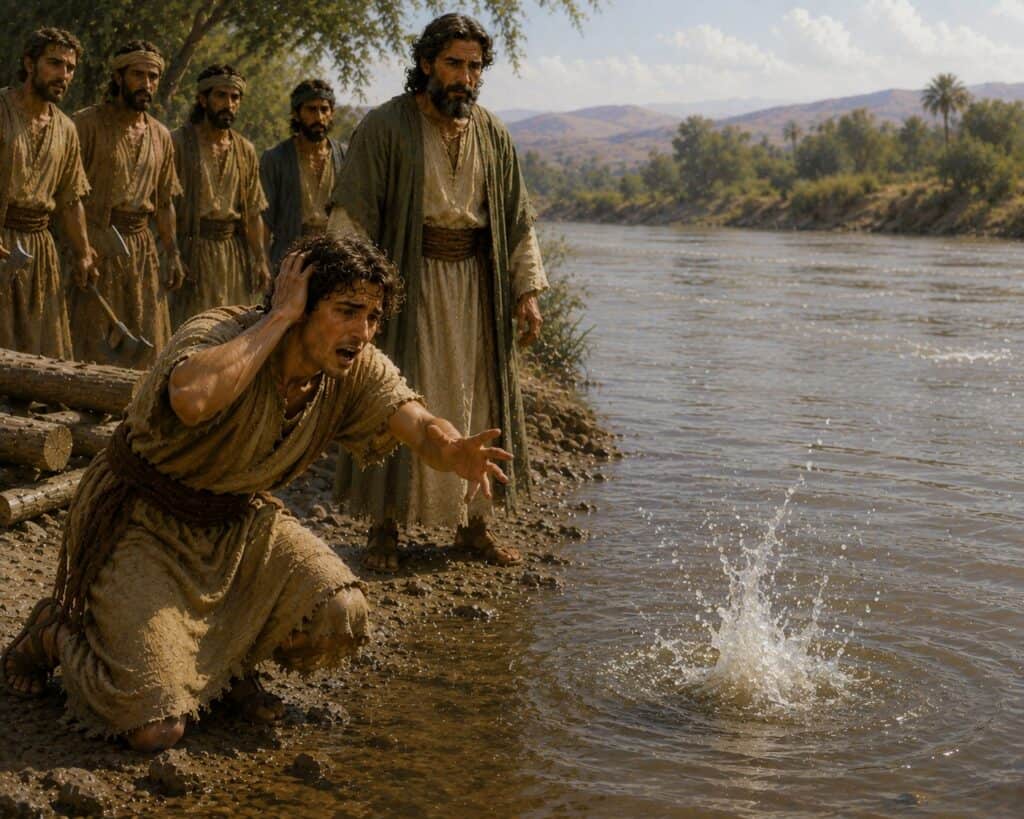
“Alas, my master! It was borrowed.” (2 Kings 6:5)
Those four words reveal why this was far more than a minor inconvenience. The axe did not belong to him. He had borrowed it from someone else and now believed it was lost forever.
That may not sound like a major problem to us today. If we lose a tool, we simply replace it. In Elisha’s day, however, iron tools were expensive and difficult for many people to obtain. Losing a borrowed axe head would have placed a significant financial burden on a man who was likely already living with very little.
Instead of dismissing the problem as insignificant, Elisha asked a simple question.
“Where did it fall?” (2 Kings 6:6)
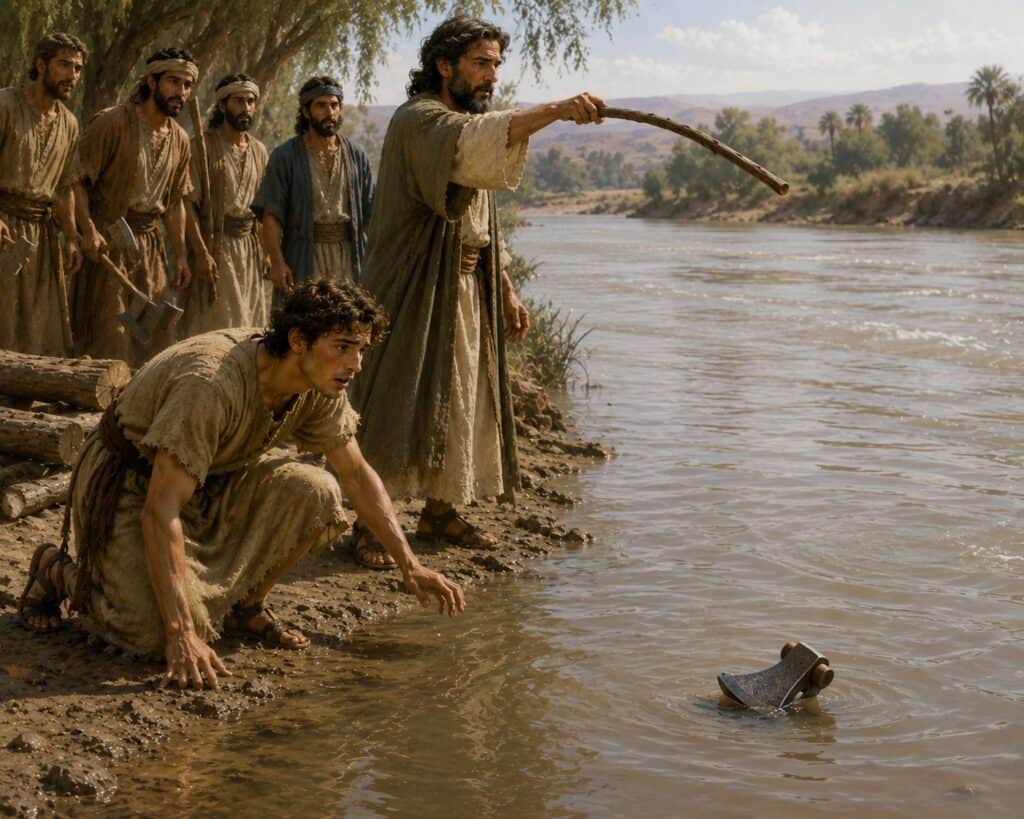
After the young prophet pointed to the place where the axe head had disappeared beneath the water, Elisha cut off a stick and threw it into the river. Then something happened that defied every law of nature.
The Bible says that Elisha “made the iron float. And he said, ‘Take it up.’ So he reached out his hand and took it” (2 Kings 6:6-7).
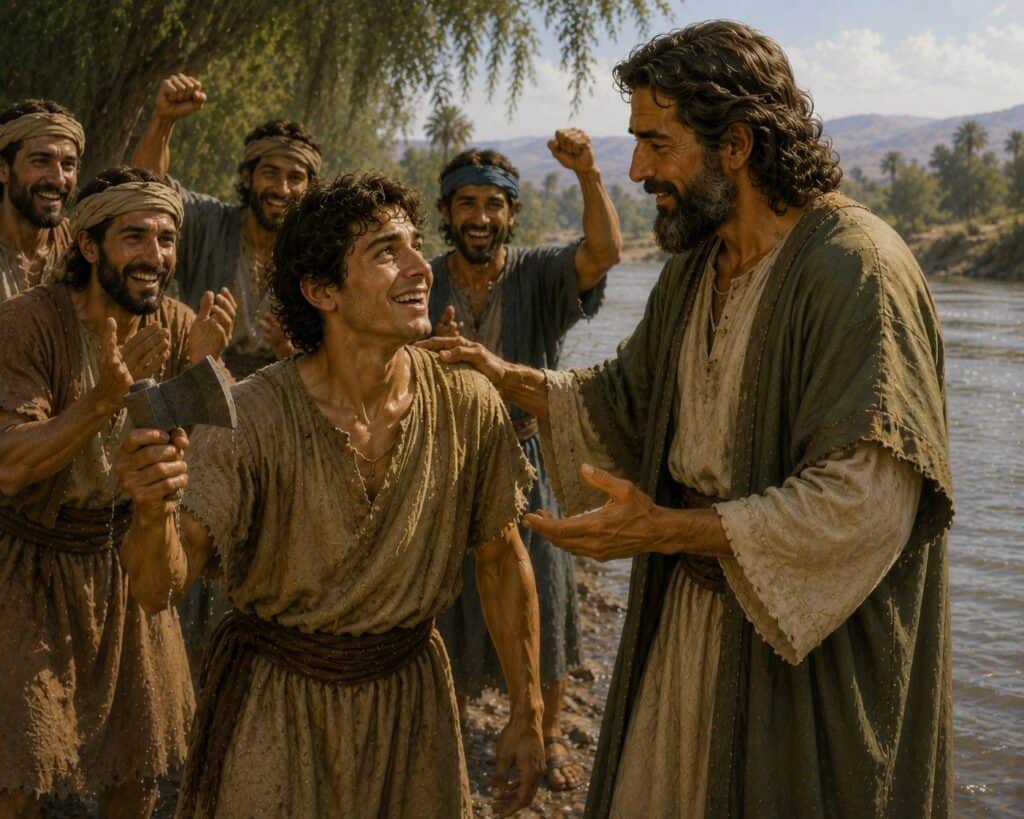
Just moments earlier, the heavy iron axe head had sunk beneath the surface of the Jordan River. Now it floated where it could be recovered, allowing the young prophet to return the borrowed tool to its owner.
That is the entire story.
No crowds gathered to witness the miracle. No king stood nearby in amazement. No great battle was won, and no nation was delivered from its enemies. It is simply the account of a borrowed axe head, a concerned young prophet, and a miracle that solved what many people would have considered a very small problem.
Yet that raises an important question. Why would God choose to preserve this story in Scripture? Out of all the events that occurred during Elisha’s ministry, why record a miracle involving nothing more than a borrowed tool?
As we look more closely at the passage, we discover that this miracle was never really about an axe head. Instead, it reveals several timeless truths about God’s character that continue to encourage believers thousands of years later.
What Does the Floating Axe Head Mean?
At first glance, this miracle may seem almost insignificant. After all, God had used Elisha to heal diseases, provide food during famine, and even raise a young boy from the dead. Compared to those miracles, recovering a borrowed axe head hardly seems worthy of being recorded in Scripture.
But that is exactly what makes this account so remarkable.
The floating axe head reminds us that God is concerned with the ordinary details of our lives just as much as He is with life’s extraordinary moments. Most of us will never stand before kings or lead a nation through a crisis. We spend our days going to work, caring for our families, paying bills, helping our neighbors, and trying to faithfully serve Christ in the middle of ordinary routines. It is easy to wonder whether God notices those everyday moments.
This story assures us that He does.
Notice that the young prophet did not lose the axe head because he was being careless or irresponsible. He was working. In fact, he was helping build a larger place where God’s servants could live and study. He was engaged in good work when the unexpected happened. That is often true in our own lives. Problems don’t always come because we have made poor choices. Sometimes they interrupt us while we are faithfully doing exactly what God has called us to do.
Perhaps that is one reason this story resonates with so many believers. Life has a way of surprising us. A medical diagnosis arrives without warning. A job suddenly disappears. A car breaks down. A family emergency changes carefully made plans. Most of the difficulties we face are not dramatic enough to make the evening news, but they are significant to us because they affect the lives we live every day.
“Important” vs “Unimportant”???
The miracle of the floating axe head reminds us that God does not divide our concerns into “important” and “unimportant” categories. If something matters to His children, it matters to Him.
Jesus taught the same truth centuries later. He reminded His followers that not even a sparrow falls to the ground apart from the Father’s knowledge and that the very hairs of our heads are numbered (Matthew 10:29-31). Those examples were meant to assure believers that God’s care extends far beyond the great events of history. His attention reaches into the smallest details of our lives.
The apostle Peter echoed that same truth when he encouraged believers to be “casting all your anxieties on him, because he cares for you” (1 Peter 5:7). Peter did not tell us to bring only our greatest burdens to the Lord. He simply said to bring them all.
That does not mean God promises to solve every problem through a miracle. Most of us will never see iron float on water or watch God suspend the laws of nature on our behalf. The miracle itself was unique, but the God behind the miracle has not changed. The same God who cared about one borrowed axe head still cares about the burdens that weigh on His people today.

There is another lesson woven quietly into this story. When the young prophet cried out, his greatest concern was not the loss of the tool itself. His immediate response was, “It was borrowed.” His heart was troubled because he had been entrusted with something that belonged to another person. That simple statement reveals a man who understood responsibility and integrity.
The Bible consistently teaches that faithfulness begins with the ordinary responsibilities God places before us. Long before someone is trusted with great things, he learns to be faithful with small things. Jesus later taught this principle when He said, “One who is faithful in a very little is also faithful in much” (Luke 16:10). The concern shown by this young prophet reflects that same attitude. He wanted to honor the trust that had been placed in him.
Perhaps the greatest truth revealed in this passage is simply this: God’s greatness is often displayed in His attention to what others overlook. We tend to celebrate the spectacular while ignoring the ordinary. God often does the opposite. Throughout Scripture we find Him speaking to shepherds, choosing fishermen, blessing widows, noticing children, and caring for people the rest of the world considered insignificant. The floating axe head fits beautifully into that pattern. It reminds us that our heavenly Father is never too busy for the needs of His children, even when those needs seem small in comparison to everything else happening in the world.
That should change the way we pray. Sometimes we hesitate to bring everyday concerns before God because they seem too trivial. We assume He must be more interested in world events than in our broken appliances, financial pressures, strained relationships, or unexpected setbacks. Yet this miracle reminds us that God invites us to bring every concern to Him. While we should never treat Him like a genie whose purpose is to solve every inconvenience, neither should we hesitate to approach Him with the ordinary burdens of life. A Father who cared enough to recover a borrowed axe head certainly cares enough to listen when His children call.
Leave a Reply