

Most Christians already know that trusting God is the right thing to do. We’ve heard the verses. We’ve sung the songs. We believe God is faithful, loving, and sovereign.
And yet — when fear creeps in at night, when the bills are due, when health is uncertain, when relationships shake — trust doesn’t always come easily.
You can love God deeply…
You can believe the Bible completely…
And still wake up with a tightness in your chest wondering how everything is going to turn out.
So the real question many believers quietly wrestle with is this:
How do I actually trust God — in the moment — when I’m worried, anxious, or uncertain?
Trust isn’t just a doctrine to affirm.
It’s a posture of the heart that must be learned and practiced.
Let’s walk through that process together.
Trusting God Isn’t Automatic — It’s Learned
The Bible doesn’t present trust as something effortless or instant. In fact, David — a man after God’s own heart — wrote these words:
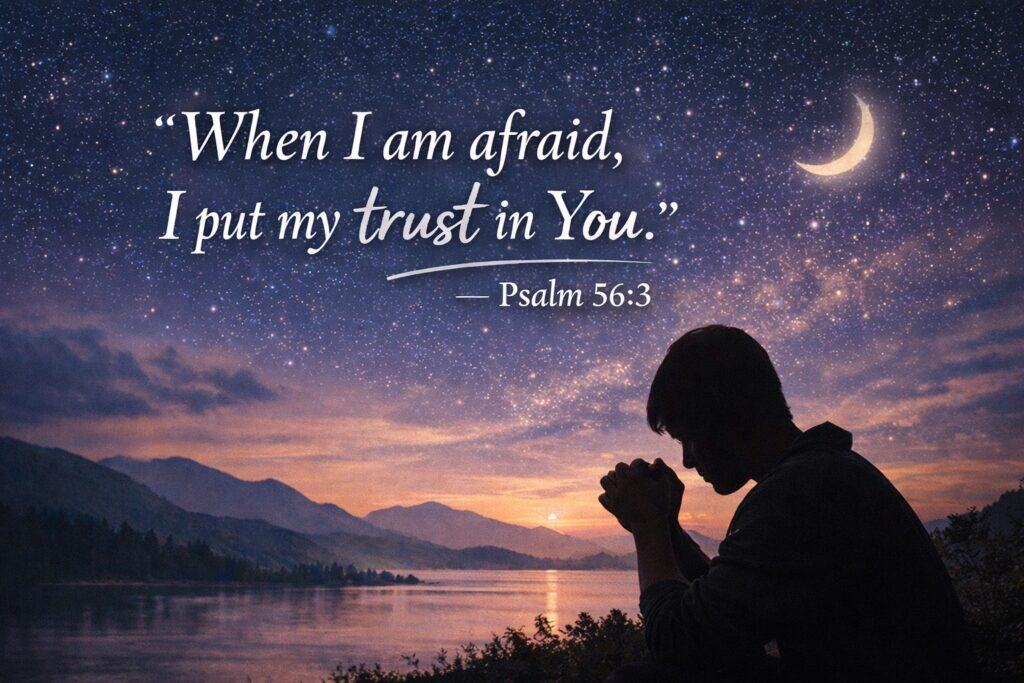
“When I am afraid, I put my trust in You.”
— Psalm 56:3
Notice the order:
Fear first.
Trust second.
David didn’t deny fear.
He didn’t shame himself because he felt it.
He simply turned fear toward God — again and again.
That’s reassuring, isn’t it?
Because trusting God doesn’t mean:
- you never feel afraid
- you never wrestle with uncertainty
- you always feel peaceful
It means that when fear shows up, you decide where to take it.
Trust is not a natural reflex.
It is a spiritual habit — developed over time.
Step One — Name Your Real Fear Honestly Before God
A lot of Christians think trust means pretending everything is fine.
But real trust starts with honesty.
If you’re going to learn to trust God, you must first say:
- “Lord, I’m afraid I won’t have enough.”
- “Lord, I’m afraid I will fail.”
- “Lord, I’m afraid You may not come through the way I want.”
- “Lord, I’m afraid I will be embarrassed if this doesn’t work… and people will see me as a failure.”
Those are deep, vulnerable fears.
And God already knows they live in your heart.
When you name your fear before God, you are not dishonoring Him — you’re inviting Him into the conversation your soul is already having.
Many believers skip this step, then wonder why their trust feels thin.
Trust cannot grow in denial.
It grows in honesty.
Step Two — Bring That Fear Into God’s Presence
Trust isn’t merely believing truths about God.
It is a relational act.
It sounds like this:
“Father, here is exactly what I’m worried about — and I’m bringing it to You instead of carrying it alone.”
That’s what Scripture means when it tells us to cast our cares on the Lord. We don’t simply acknowledge worries; we hand them over.
This is often where the heart begins to slow down.
Because fear is heavy — and we were never meant to carry it by ourselves.
Step Three — Anchor Your Fear to the Promises of God
Trust grows when it has something solid to lean on.
Not clichés.
Not empty optimism.
Not vague spirituality.
But God’s own Word.
Here are just a few anchors believers return to:
- “God works all things together for good to those who love Him.”
- “My God will supply all your needs.”
- “I will never leave you or forsake you.”
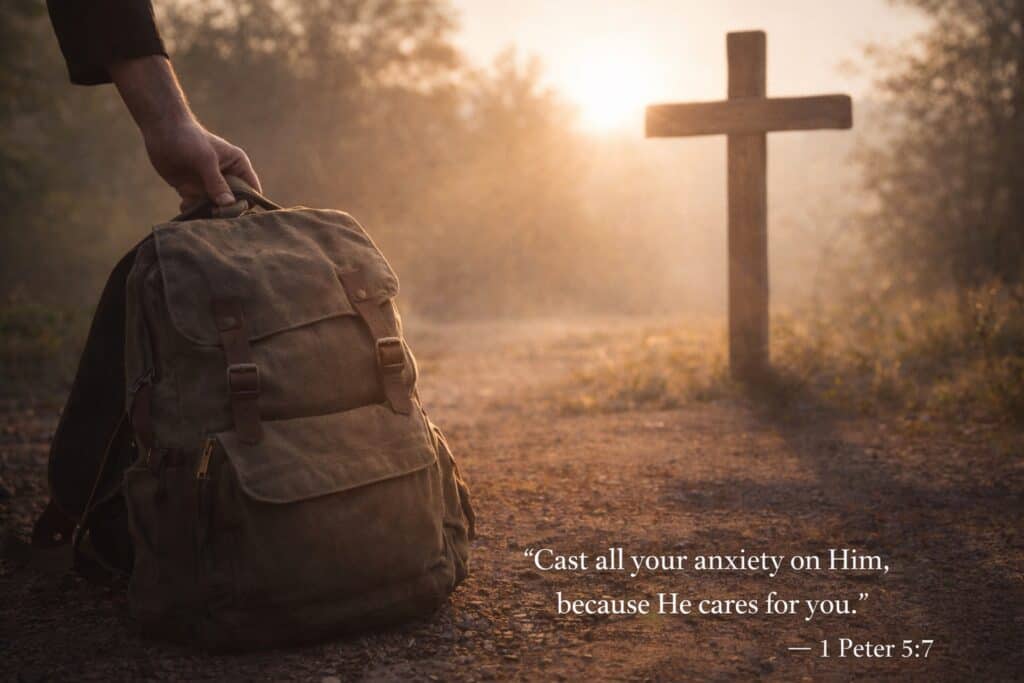
- “Cast all your anxiety on Him, because He cares for you.”
Faith does not rest on feelings.
Faith rests on truth.
And the more clearly you see God’s character in Scripture, the easier it becomes to lean into Him.
Trust grows out of relationship — not technique.
Step Four — Make a Deliberate Transfer
This is the quiet turning point.
Trust isn’t simply an idea — it is a decision.
It sounds like this:
“Lord, I choose to give this to You.
I cannot control outcomes.
I cannot carry this weight.
I place it in Your hands.”
That doesn’t mean all feelings disappear.
It doesn’t mean you never think about it again.
It means the responsibility shifts.
You stop living as if everything depends on you — and you begin resting in the hands of a faithful God.
Step Five — Act Like God Is Faithful (because He is) Even Before You Feel Peace
Some people think that hypocrisy is actiing differently than how you feel. Well that might apply sometimes. But hyprocirsy is really acting differenlty than what is true about us. And what is true about a child of God is that they are loved, they are accepted as a child of the King. We have the inputed righteouness of Christ in us – even though we dont act like it sometimes.
Standing on, and acting on who we are in Christ rather than how we feel about ourselve is sometimes one of the hardest parts.
And to trust well, we need to make some choices like:
- refusing to rehearse worst-case scenarios over and over in our minds
- choosing obedience to God’s word instead of panic
- continuing to do the next right thing as he reveal it to us step by step
- refusing to measure God’s love by your circumstances
- letting go of the need to control outcomes
Trust is not passivity.
Trust is faith in motion.
You behave toward God as if He is telling the truth (because He is) — even when your emotions lag behind.
And in time… they usually catch up.

Step Six — Repeat Daily
Jesus told us to pray:
“Give us this day our daily bread.”
Not next month’s bread.
Not a lifetime supply in advance.
Why?
Because life comes in daily portions.
And so does trust.
You don’t learn to trust God once.
You learn through repetition.
Worry is daily — but so is grace.
And each time you place your fears back into His hands, your reflex slowly changes.
What About the Fear of Failure and Embarrassment?
Let’s address a fear few people admit openly:
“What if I fail — and people see it? What if I look foolish?”
This fear goes deeper than financial loss.
It touches identity and worth.
But here’s the truth:
- Your value does not come from success.
- God is not ashamed of you.
- He never measures you by performance.
- Even when you stumble, His love does not change.
Peter denied Jesus publicly — and Jesus restored him gently.
God’s children are never abandoned in failure. And often, the very places we fear the most become the places where grace runs deepest.
Trust means saying:
“Lord, even if I fall short,
You will still be with me.
And that is enough.”
That’s freedom.
What Trust Does Not Mean
Trusting God does not guarantee that everything will go the way you hope.
It does not mean:
- you’ll always understand His timing
- you’ll never cry
- you’ll avoid hardship
- you’ll get the exact outcomes you prayed for
It means this:
Whatever happens — you will not face it alone.
And God will not waste it.
Trust rests more in who God is than in how He answers.
The Quiet Fruit of Learning to Trust God
Over time, something beautiful begins to happen:
- your heart settles more quickly
- your prayers become more relational than frantic
- you stop trying to control what you were never meant to carry
- peace begins to visit more often
- God grows larger in your eyes — and fear grows smaller
Not because life gets easier…
But because your confidence in Him gets deeper.
Trust becomes less of a struggle — and more of a reflex of love.
When Trust Feels Like a Slow Journey
If trusting God still feels hard for you, that doesn’t mean your faith is weak. Often, it simply means your heart has been carrying heavy things for a long time. Some of us grew up feeling responsible for everything. Some have experienced deep disappointment or loss. Others have walked through seasons where prayers seemed unanswered and God felt silent.
Those experiences leave a mark.
So when you try to trust God now, you aren’t only facing today’s fears — you are bumping into yesterday’s memories. And God understands that better than anyone. He doesn’t rush you. He doesn’t demand emotional perfection. He invites you into a growing friendship with Him — one conversation, one surrender, one step at a time.
Think of trust less like flipping a light switch and more like learning to lean. The first time you lean on God, you may still feel shaky. The second time, you may still wrestle. But over time, you begin to discover that He truly holds. And your soul begins to rest a little sooner than it did before.
This is one reason God allows us to walk with Him over many years. Trust matures. It deepens. It becomes fuller and richer through real-life experience. You begin to look back and see His fingerprints — in ways you could not see in the moment.
And slowly, the heart begins to say:
“He has never abandoned me yet.
Why would He start now?”
That’s not blind optimism.
That’s seasoned faith.
So if today you feel afraid, take the pressure off yourself. You do not have to manufacture trust. You simply turn your heart toward the God who already loves you — and let Him meet you there.
Because ultimately…
Trust grows best not by trying harder —
but by staying close to the One who is always faithful.
A Final Word of Encouragement
If you’ve struggled to trust God, you are not a second-class Christian.
You are simply human.
And God is patient with people who are learning to lean on Him.
He does not scold.
He does not roll His eyes.
He does not grow weary of you.
Instead — like a loving Father — He invites you closer.
One fear at a time.
One prayer at a time.
One day at a time.
And as you keep coming to Him, you will discover what many believers have found through the years:
Trust grows best in the hands of a God who refuses to let you go.



Leave a Reply