

I remember those mornings vividly. Long before sunrise — often around 4 a.m. — I would wake up and lie there staring at the ceiling, already feeling the weight of the day. There wasn’t always a racing mind or a specific worry attached to it. It was simply a heavy sadness that arrived before I was fully awake. Sometimes I could fall back asleep, but often I couldn’t.
Even on mornings when I slept later, that same heaviness seemed to be waiting for me. Depression didn’t wait for daylight. It hovered. It pressed in. It made the first moments of the day feel harder than any other.
If you’ve experienced something like this, you’re not imagining it. Many people who live with depression find that mornings are the most difficult part of the day. You wake up already tired, your emotions feel fragile, motivation feels distant, and the quiet of early hours seems to magnify everything you’re carrying.
For Christians, this can be especially confusing. You may love God, believe His promises, and pray regularly, yet still wake with a weight that feels out of proportion to the day ahead. If that sounds familiar, let me say this gently: you are not failing spiritually. You are human, walking through something hard.
Morning depression often shows up quietly. It doesn’t always announce itself with panic or tears. Sometimes it comes as a dull heaviness, a sense of dread, or a feeling that getting out of bed will require more strength than you seem to have. You may wake with sadness or emotional numbness, feel overwhelmed before the day even begins, or struggle to focus your thoughts enough to pray or read Scripture. For many believers, this creates an added layer of pain.
You may wonder why faith hasn’t lifted it, feel guilty for starting the day discouraged, or quietly question whether something is wrong with your walk with God. But depression doesn’t follow spiritual schedules. It affects the body, the mind, and the emotions, and it often makes itself known most clearly when the day is just beginning. That doesn’t mean God is far away. It means you’re carrying something real.

There usually isn’t just one reason mornings feel heavier. Most of the time, several things are happening at once. Our bodies operate on daily rhythms that affect mood, energy, and emotional balance. In the early morning hours, the chemicals related to motivation and emotional regulation are often at lower levels, while stress hormones tend to rise as the body prepares to wake. For someone already struggling with depression, this shift can make sadness feel sharper and exhaustion feel deeper right at the start of the day. This isn’t weakness. It’s biology meeting emotional strain.
Depression also frequently interferes with sleep. Some people wake very early and can’t fall back asleep. Others sleep lightly or restlessly. Even when you’ve technically been in bed for hours, your body may not feel restored. That kind of tiredness doesn’t just affect your energy; it affects how you experience everything. When you’re depleted physically, your ability to cope emotionally is already compromised.
And then there is the quiet of morning itself. At night you’re tired. During the day you’re busy. But mornings are often still. There are fewer distractions, fewer voices, fewer demands. That quiet space can allow heavy thoughts and emotions to surface more clearly. Depression often speaks loudest when everything else is still. Put together, this creates a perfect storm: a tired body, a vulnerable mind, and a quiet moment where sadness feels unavoidable. If mornings have been your hardest time, there’s a reason — and it doesn’t mean you’re broken.
When Depression Won’t Lift
If prayer feels difficult, your thoughts feel heavy, or hope feels distant, 9 Practical Strategies to Cut Through the Fog of Depression was written for seasons exactly like this. It offers steady, Scripture-centered guidance you can return to day by day.
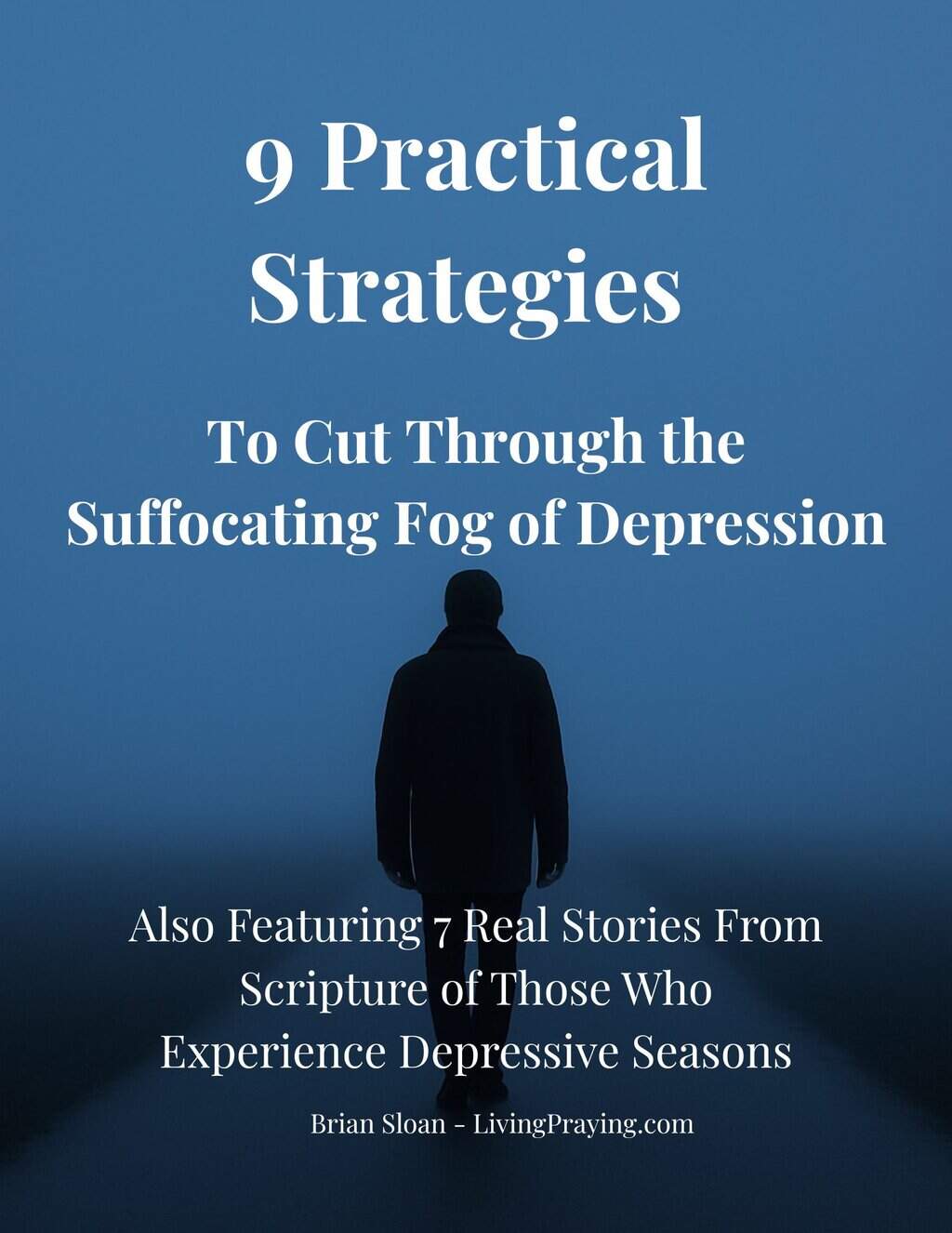
- Clear structure for days when focus and energy are low
- Biblical encouragement without pressure or clichés
- Practical steps rooted in grace, not guilt
- Written pastorally for real-life seasons of struggle
A Christian Perspective: God Meets Us in the Morning Darkness
God Draws Near in Our Weakest Hours
One of the quiet lies depression tells us is that God is distant when we feel low. Morning heaviness can make it seem as though faith has gone silent, as if prayer no longer reaches heaven or Scripture has lost its power. But the Bible never suggests that God withdraws from us during seasons of weakness. In fact, Scripture repeatedly shows Him drawing near to people in their darkest hours.
The psalmist once prayed, “Let the morning bring me word of your unfailing love, for I have put my trust in you” (Psalm 143:8). That verse doesn’t assume the morning already feels hopeful. It acknowledges that the heart may awaken in need of reassurance. It is a prayer offered from a place of dependence, not strength. And it reminds us that God’s unfailing love does not wait for us to feel better before meeting us.
Lamentations tells us that God’s mercies are new every morning. That doesn’t mean sorrow disappears overnight or that sadness is magically replaced with joy at sunrise. It means grace is renewed, even when emotions lag behind. It means compassion is present before the coffee brews and before the mind fully wakes. It means that God is already at work in the hours when you feel most fragile.
When Faith Feels Quiet
When I walked through clinical depression, mornings were often the loneliest time. I knew the truths of Scripture. I had preached them for years. Yet lying awake before dawn, those truths sometimes felt distant, as though they belonged to someone else’s life. What I slowly learned, however, is that faith during depression often looks quieter than we expect. It may not feel like confidence or peace. Sometimes faith simply looks like staying in the room with God, even when you have no words. It looks like breathing a simple prayer. It looks like choosing not to condemn yourself for how you feel.
Depression does not cancel your relationship with God. It does not disqualify you from His care. It does not mean your prayers are less heard or your worship less sincere. Some of the most faithful moments of your life may be the ones no one sees, when you lie awake in the early morning and whisper, “Lord, help me,” because that is all you have strength to say.
Gentle Ways Forward on Heavy Mornings
Scripture gives us permission to bring God our heaviness without pretending we are okay. Many of the psalms are honest cries from people who felt overwhelmed, abandoned, or exhausted. They did not hide their distress. They brought it openly before God. That same invitation is extended to you. You do not need to tidy up your emotions before coming to Him. He meets you as you are.
Alongside prayer and Scripture, there are also gentle, practical ways to care for yourself when mornings feel especially heavy. These are not cures, and they are not formulas. They are simply small, compassionate steps that can help you move through the early hours with a little more steadiness.
You might begin with a single verse rather than a long passage of Scripture, allowing just a few words to settle into your heart. You may find it helpful to pray short, honest prayers instead of trying to form complete sentences. Something as simple as “Lord, walk with me today” can be enough. Letting natural light into your room as soon as you can, even on cloudy days, may help your body gently transition into waking. Light movement, such as stretching or a slow walk, can remind your nervous system that you are safe. It can also be wise to avoid making big decisions first thing in the morning, since emotions often soften later in the day.

Most importantly, try not to judge the entire day by how it begins. Depression has a way of convincing us that morning feelings predict the rest of our hours. In reality, many people notice that their emotional state shifts as the day unfolds. A heavy start does not mean the whole day is lost.
If you are able, reaching out to one trusted person can also make a difference. Depression thrives in isolation, especially in the quiet of early hours. You do not have to carry this alone. Even a brief message or conversation can remind you that you are connected and cared for.
There may also come a point when ongoing morning depression signals the need for additional support. Speaking with a doctor, counselor, or therapist does not reflect weak faith. It reflects wisdom. God often works through medical care, counseling, and the support of others alongside prayer and Scripture. Seeking help is one way of honoring the life He has given you.
As believers, we sometimes feel pressure to appear strong, especially when our struggle is invisible. But God does not ask us to be strong in isolation. He invites us to bring our weakness to Him and to allow others to walk beside us. Morning depression does not mean you are spiritually deficient. It means you are human, living in a world where both faith and suffering coexist.
If mornings have been your hardest time, please remember this: God is present before the sun rises. He sees you lying awake. He hears the prayers you can barely form. His compassion has not run out. Even when depression greets you at dawn, His faithfulness remains steady.
| What’s Happening | How It Feels | Why It Matters | Gentle Response |
|---|---|---|---|
| Body chemistry shifts | Low energy, heavier emotions | Your system is waking up under strain | Move slowly; give yourself time |
| Poor or broken sleep | Foggy thinking, deep fatigue | Rest was incomplete | Practice self-kindness; simplify the morning |
| Quiet early hours | Sadness feels louder | Fewer distractions amplify emotion | One short verse or simple prayer |
| Emotional carryover | Yesterday’s weight returns | Feelings don’t reset overnight | Don’t judge the whole day by the first hour |
When Morning Depression Becomes Ongoing
If mornings feel heavy once in a while, that can be part of being human. But if you find yourself waking with sadness, dread, or emotional numbness day after day, it may be a sign that you need additional support. Depression is not something you are meant to carry alone, and seeking help is not a failure of faith.
Talking with your primary care doctor can be a good first step, especially if sleep disruption, fatigue, or physical symptoms are part of what you’re experiencing. Counseling can also provide a safe space to process what you’re carrying, and many believers find great benefit in working with a therapist who respects their faith. Sharing honestly with a trusted Christian friend or pastor can help break the isolation that often accompanies depression.
God frequently works through people, medical care, and wise counsel alongside prayer and Scripture. Reaching out is not giving up. It is choosing to care for the life He has entrusted to you.
If you’re looking for additional encouragement and biblical guidance, you may find it helpful to visit our Christians and Depression: Biblical Truth, Hope, and Resource Hub, where you’ll find Scripture-rooted articles written to support believers walking through difficult seasons.
I’ve also created a gentle, pastor-guided resource designed to help Christians take small, steady steps forward when depression feels overwhelming. It’s not a quick fix or a clinical program. It’s a practical, faith-centered companion meant to walk with you through the fog.
👉 Begin the 9 Practical Strategies
A gentle note about pricing: This resource is offered on a pay-what-you-can basis so that no one is turned away. If you’re able, most readers choose $4–$5 to help sustain this ministry and make it possible for me to continue creating Scripture-rooted encouragement. If finances are tight, you’re welcome to choose the lowest option.
A Closing Word
If mornings have been hard for you, please know that you are seen, you are loved, and you are not forgotten by God. Depression has a way of making everything feel permanent, especially in the quiet hours of the day, but this season does not define your worth or your future.
Healing often comes slowly. Hope may return in small, quiet ways. Some days will feel lighter than others. Through it all, God remains faithful. He is present before the sun rises, attentive to every sigh, and gentle with every weary heart.
You don’t have to face tomorrow by yourself. Take today one step at a time, and trust that even in the heaviness of morning, God is walking with you.



Leave a Reply